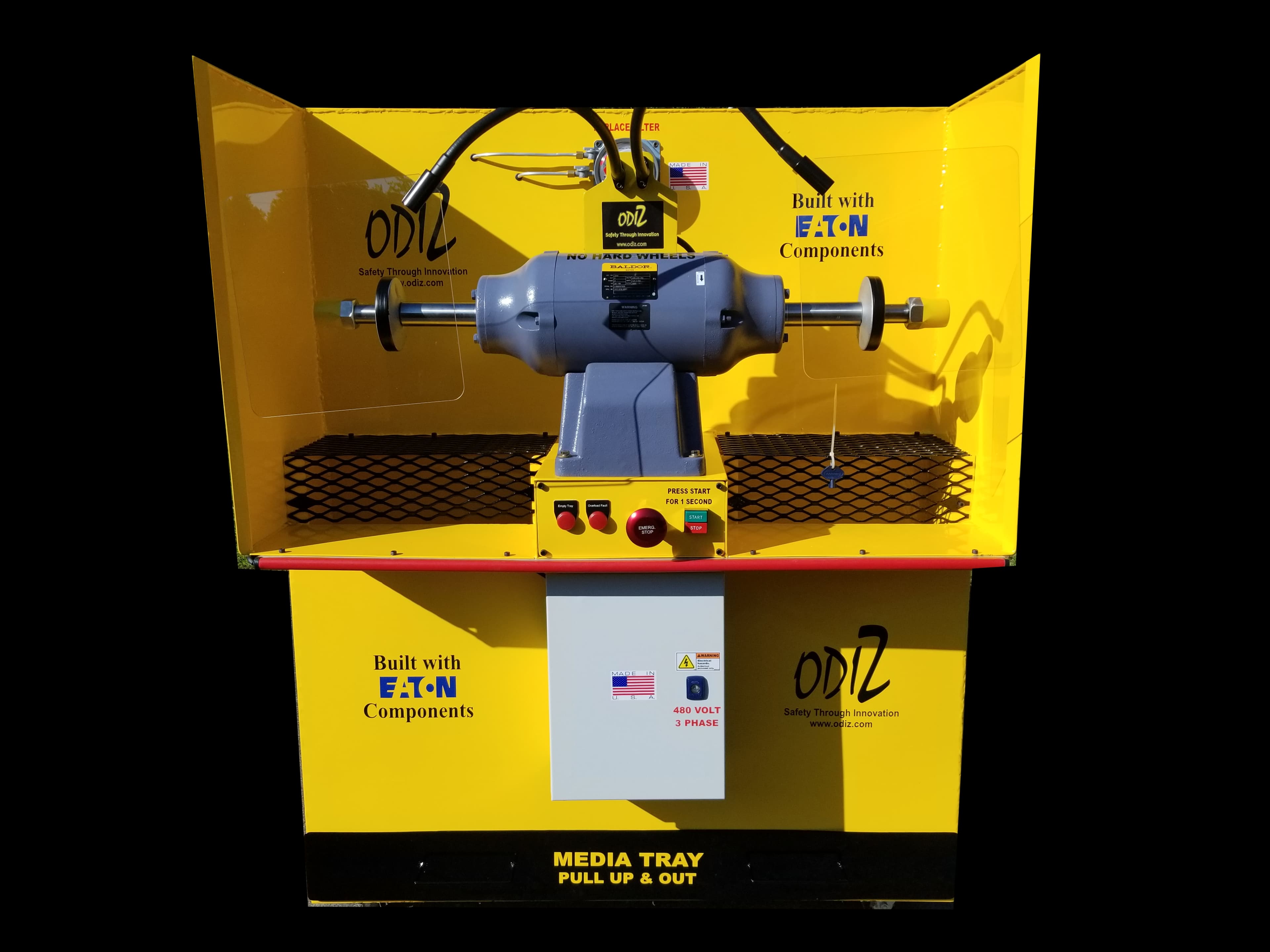
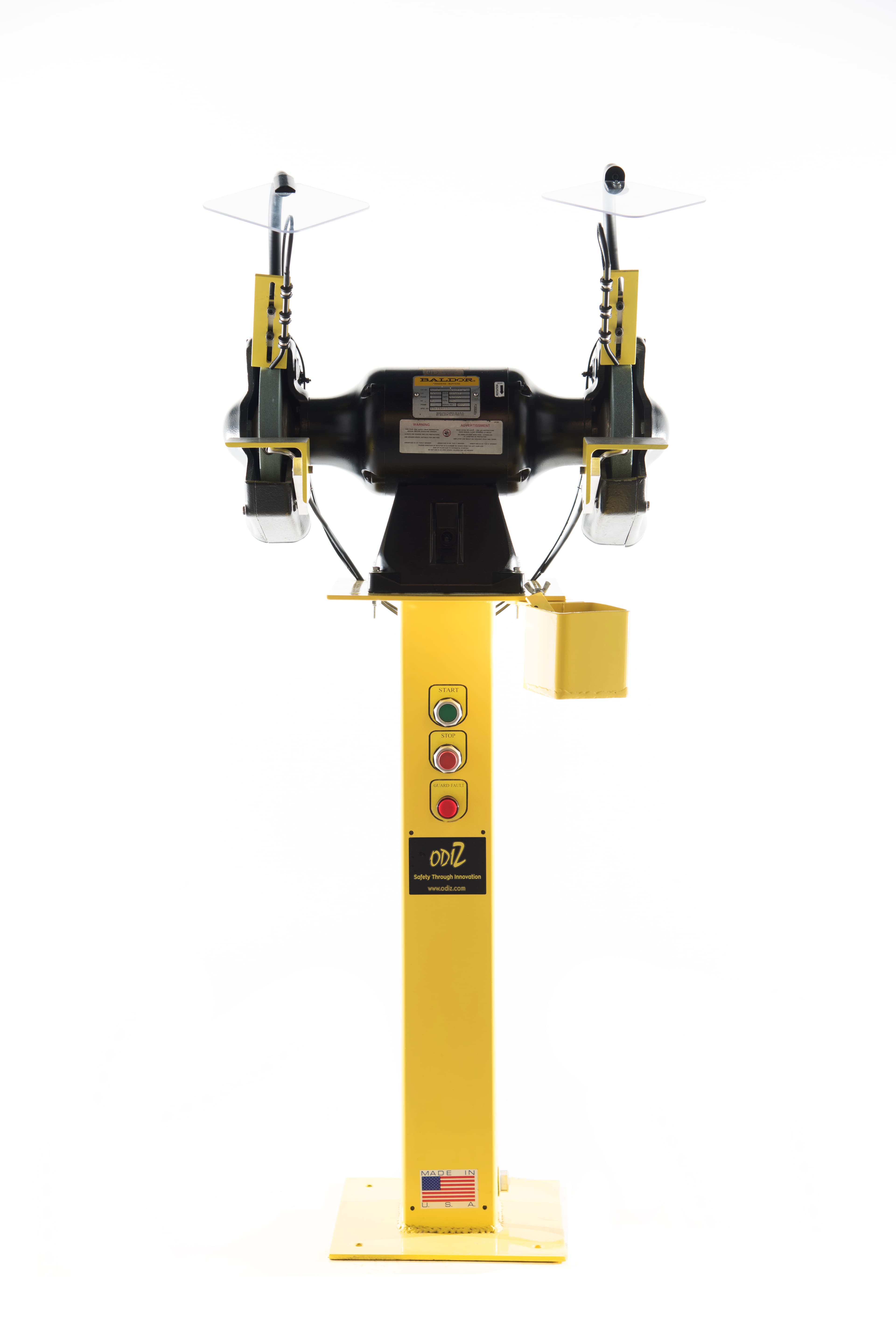
OSHA 1910.215(a)(1) — Machine Guarding Requirements for Abrasive Wheel Machinery
OSHA 29 CFR 1910.215(a)(1) establishes the fundamental rule for machine guarding on abrasive wheel machinery.
It requires that abrasive wheels be operated only on machines equipped with safety guards designed to contain wheel fragments and protect operators from contact, sparks, and debris.
These guards are mandatory unless the wheel type falls under a specific exemption defined elsewhere in the standard.
Regulatory Text
“Machine guarding. Abrasive wheels shall be used only on machines provided with safety guards as defined in the following paragraphs of this section, except:”
Purpose and Intent
The purpose of OSHA 1910.215(a)(1) is to ensure that all abrasive wheel machines are operated with guards capable of protecting workers from the violent failure of grinding wheels.
Abrasive wheels rotate at extremely high speeds—often exceeding 6,000 RPM—and a wheel failure can eject fragments at speeds approaching that of a bullet.
Proper machine guarding prevents these fragments from striking operators and reduces the risk of lacerations, amputations, and fatal injuries.
Key Requirements
- Mandatory guards: All abrasive wheels must be used only on machines that have safety guards conforming to 1910.215 design specifications.
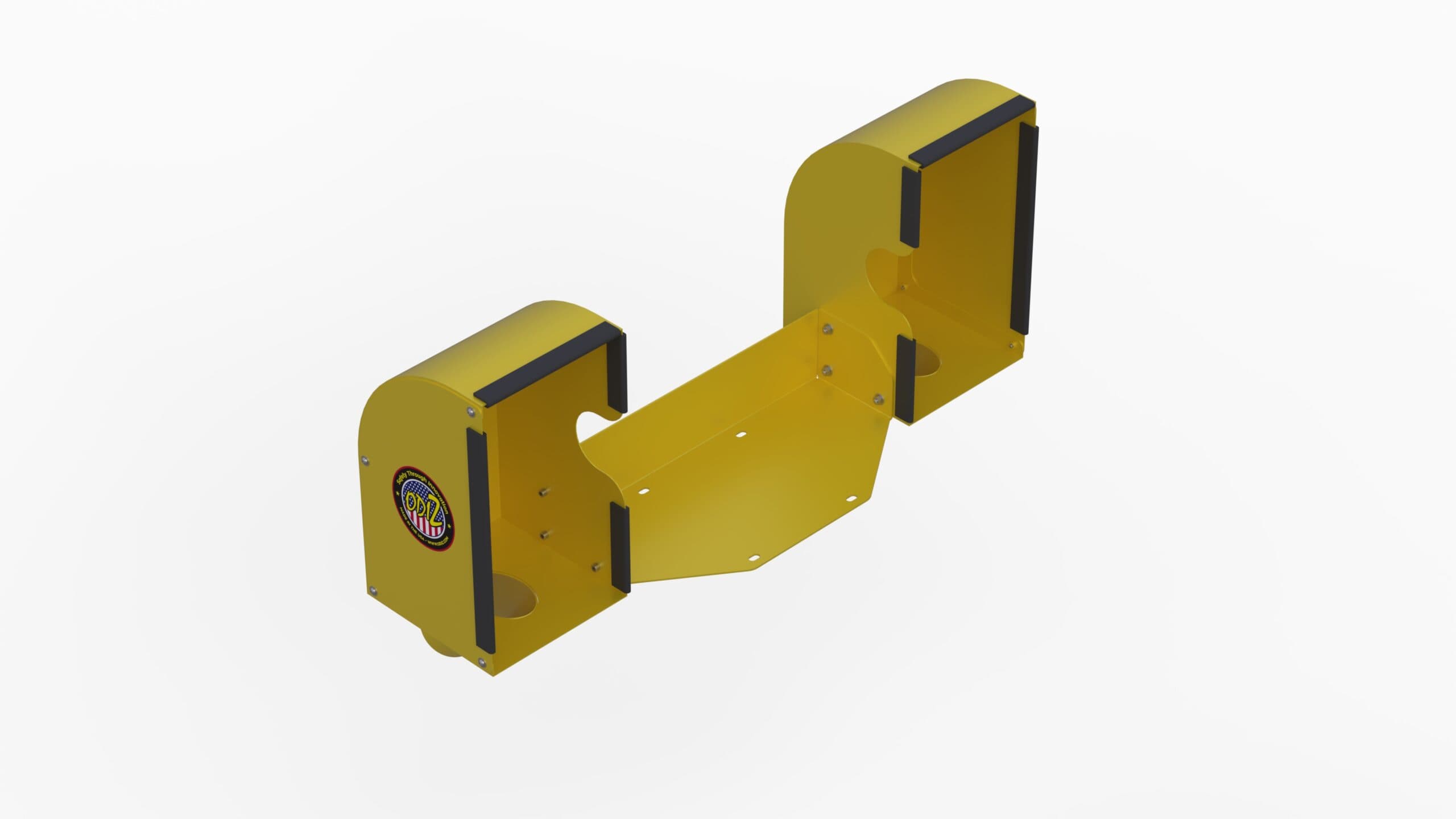
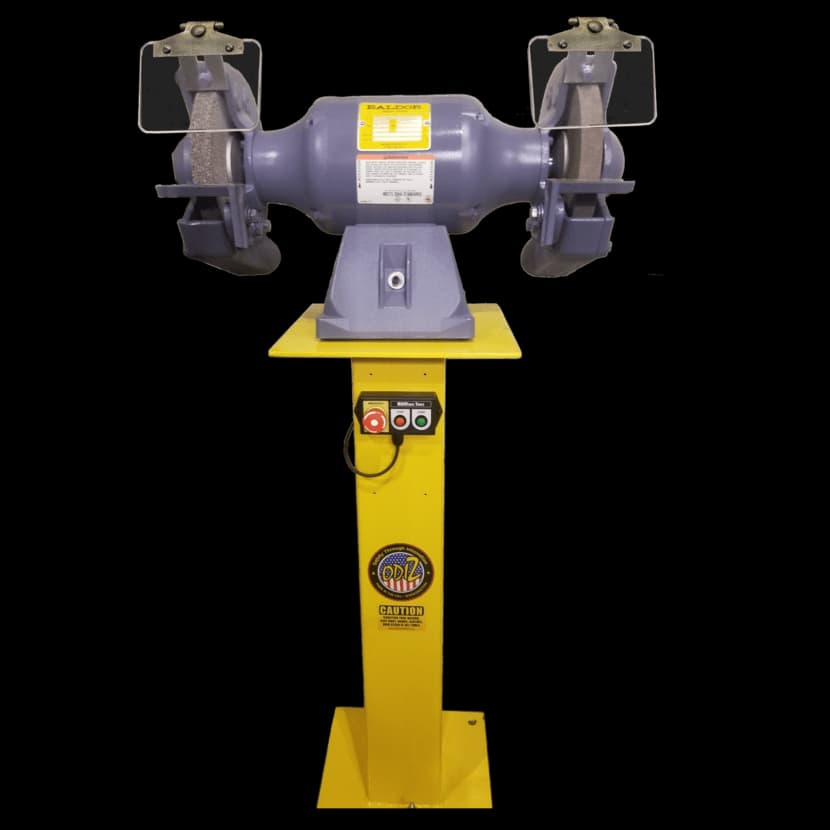
- Guard design: Guards must fully enclose the wheel periphery and sides, except for the necessary exposure required for the work process.
- Exceptions: Certain wheel types—such as mounted wheels (two inches or smaller in diameter) and internal wheels used within workpieces—are exempt from the full guard requirement.
- Containment strength: Guards must be strong enough to withstand the force of wheel fragments if the wheel bursts at maximum operating speed.
- Secure installation: Guards must be rigidly mounted to the machine frame and positioned so that they do not interfere with work operations.
Common Hazards Controlled
- Wheel explosion: Guards contain high-velocity fragments from cracked or defective wheels.
- Operator contact: Prevents accidental hand or finger contact with the abrasive surface.
- Flying debris and sparks: Reduces risk of eye and face injuries caused by airborne particles.
- Kickback: Limits rebound of workpieces or fragments during grinding operations.
Guard Construction Guidelines
- Guards should be made of steel or equivalent material capable of containing wheel fragments under centrifugal force.
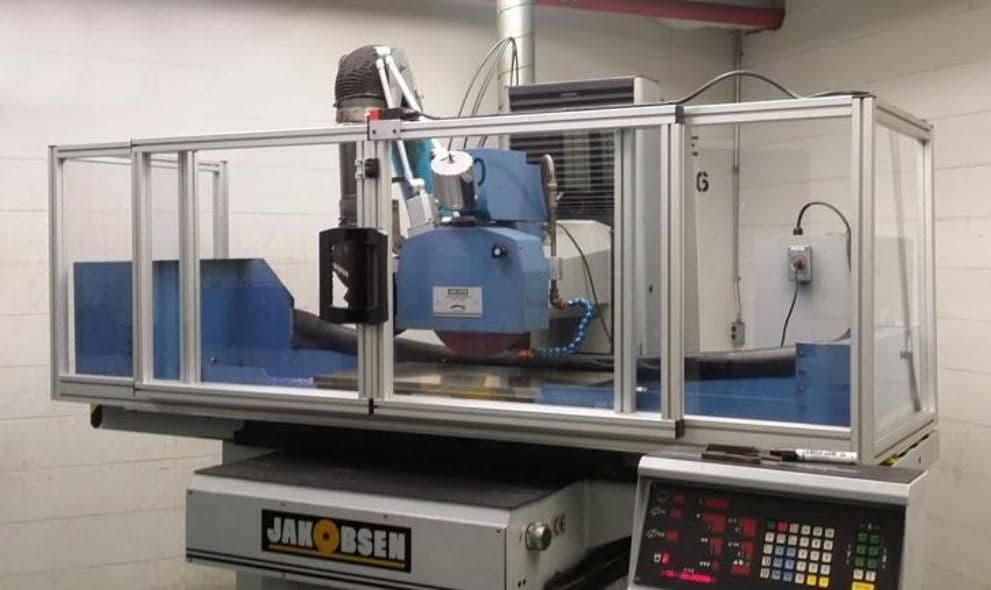
- Exposure openings must not exceed 90° for bench or floor grinders and 125° for cylindrical grinders, unless otherwise specified.
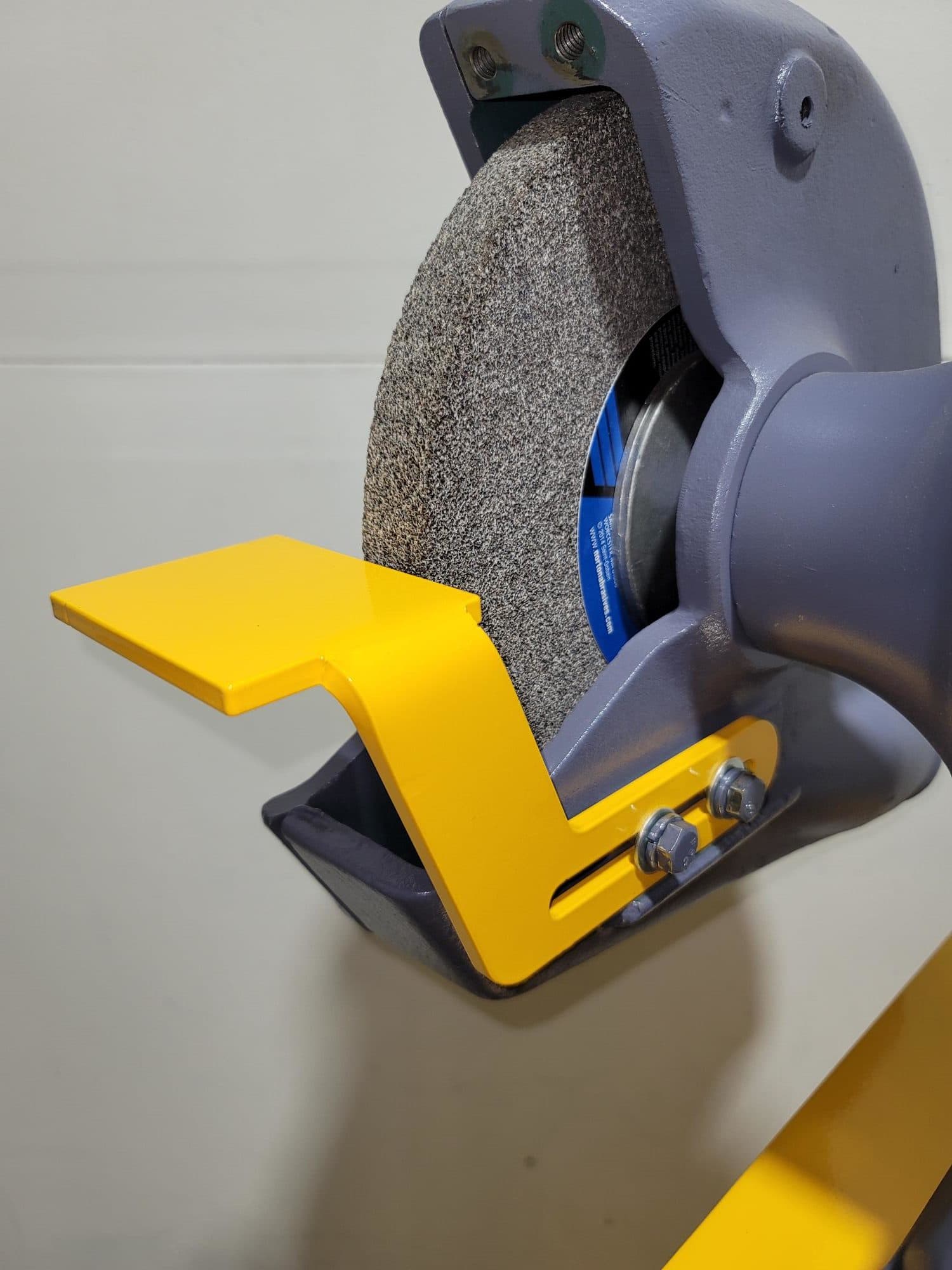
- Guards must include adjustable tongue deflectors set close to the wheel surface to deflect sparks and debris.
- Portable grinders must have guards enclosing at least 180° of the wheel periphery.
- Guards must be securely fastened to prevent shifting during vibration or wheel replacement.
Inspection and Maintenance Practices
- Verify that all abrasive wheels are properly guarded before operation.
- Check guard fasteners and mounting brackets regularly for tightness and damage.
- Inspect guards for cracks, corrosion, or metal fatigue caused by continuous vibration.
- Ensure that guard openings conform to OSHA’s exposure limits for the specific grinder type.
- Document inspection results as part of the facility’s machine safety program.
Best Practices for Compliance
- Use only guards provided or approved by the machine manufacturer to ensure proper fit and protection.
- Train all operators on guarding requirements and safe grinding techniques.
- Implement lockout/tagout procedures (per OSHA 1910.147) before adjusting or replacing guards.
- Ensure guards are replaced immediately after wheel dressing or maintenance activities.
- Post visible signage reminding workers to check wheel guards before operation.
Why OSHA 1910.215(a)(1) Is Important
OSHA 1910.215(a)(1) forms the cornerstone of abrasive wheel safety by requiring that no unguarded grinding wheels are ever used.
Wheel explosions, contact injuries, and flying debris incidents are among the most severe hazards in metalworking and manufacturing environments.
Proper machine guarding—using strong, securely mounted guards—provides essential protection for operators, dramatically reducing the likelihood of catastrophic injuries.
Related Standards
- OSHA 1910.212: General requirements for all machine guarding.
- OSHA 1910.215(b): Specific design and exposure requirements for abrasive wheel guards.
- ANSI B7.1: Safety code for the use, care, and protection of abrasive wheels.
- OSHA 1910.243(c): Portable powered tool safety requirements.
FAQ
Are all abrasive wheels required to have guards?
Yes, with limited exceptions. All abrasive wheels must have guards unless specifically exempted, such as small mounted points or internal grinding wheels used inside workpieces.
Can a machine operate without a guard during maintenance?
No. The guard must be in place and properly secured during any wheel operation. Maintenance and testing must be performed under lockout/tagout conditions with the machine powered off.
Why are wheel guards so critical?
Abrasion wheels can fracture at extremely high speeds, projecting sharp fragments with lethal force. Guards are designed to contain this energy and protect nearby workers.