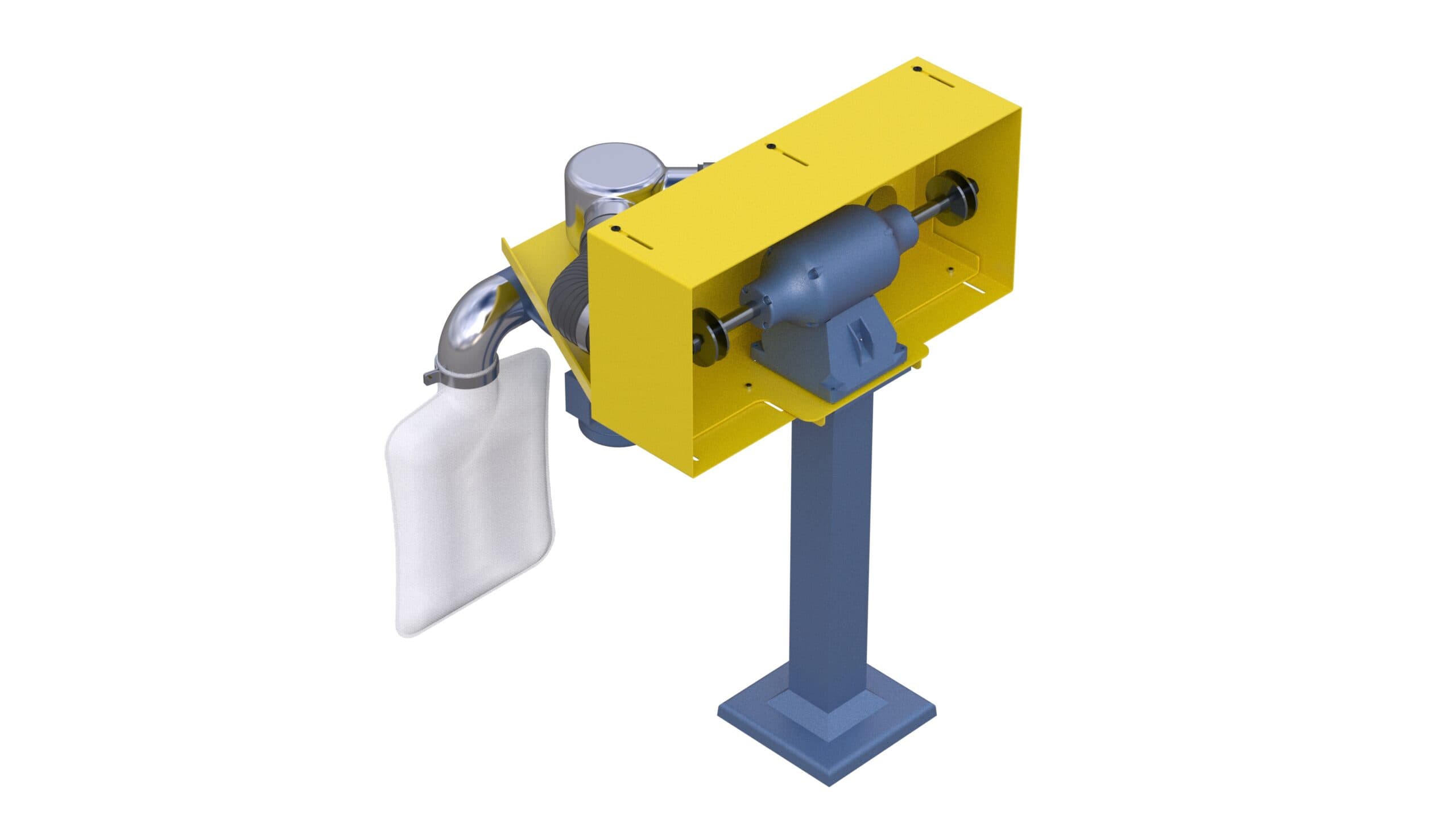
OSHA 1910.213(a)(12) — Exhaust Hood or Guarding Requirements for Circular Saws Beneath or Behind the Table
OSHA 29 CFR 1910.213(a)(12) addresses hazards associated with the underside and rear portions of circular saw blades.
The rule requires that these areas, which are often exposed below or behind the table, be enclosed by either a dust exhaust hood or a physical guard to prevent accidental contact with the rotating blade.
Regulatory Text
“For all circular saws where conditions are such that there is a possibility of contact with the portion of the saw either beneath or behind the table, that portion of the saw shall be covered with an exhaust hood, or, if no exhaust system is required, with a guard that shall be so arranged as to prevent accidental contact with the saw.”
Purpose and Intent
This provision aims to protect workers from inadvertent contact with exposed blade sections and to control airborne wood dust generated during cutting operations.
The exhaust hood serves a dual purpose: providing physical guarding and facilitating dust collection to improve air quality.
When an exhaust system is not used, a fixed or adjustable metal guard must be installed to prevent the operator or nearby workers from reaching beneath or behind the saw.
Key Requirements
- Guarding requirement: Any portion of a circular saw blade beneath or behind the table that presents a risk of contact must be enclosed.
- Exhaust hood option: When a dust exhaust system is installed, the hood must fully cover the exposed portion of the blade and connect to the collection ductwork.
- Alternative guarding: If no exhaust system is required, a rigid guard must be installed to prevent accidental hand or body contact.
- Design integrity: Guards and hoods must remain securely attached and durable enough to withstand normal operation and vibration.
- Accessibility: Guards should allow maintenance and cleaning access without compromising coverage or requiring removal during normal operation.
Common Hazards Controlled
- Accidental contact: Operators reaching beneath the table during material handling or cleanup may contact the spinning blade.
- Kickback trajectory: Ejected materials can strike workers from the rear of the machine if not shielded.
- Wood dust inhalation: Exhaust hoods capture airborne sawdust and reduce respiratory hazards.
- Entanglement: Loose clothing, gloves, or cords can be drawn into the exposed lower blade section.
Design Recommendations
- Use metal or heavy-duty polymer hoods that fully enclose the lower blade area while allowing efficient dust extraction.
- Position exhaust hoods to maximize airflow capture at the point of dust generation beneath the table.
- Ensure that all guards or hoods maintain at least ½-inch clearance from the moving blade to prevent friction or interference.
- In non-dust-collection setups, install a rigid, non-removable cover enclosing the blade beneath the table.
- Include inspection ports or hinged panels that allow for safe blade replacement and cleaning access.
Inspection and Maintenance Practices
- Inspect hoods and guards daily for cracks, looseness, or missing fasteners.
- Ensure exhaust ducts are clear of blockages and maintain sufficient suction velocity for dust control.
- Replace damaged or warped guards immediately to maintain proper clearance and coverage.
- Verify that the hood or guard fully encloses the blade whenever the saw is adjusted for depth or tilt.
- Clean accumulated dust regularly to maintain proper airflow and prevent fire hazards.
Best Practices for Compliance
- Incorporate lower blade guards into your machine guarding checklist under 1910.213 compliance audits.
- Provide operators with training on the purpose and function of exhaust hoods and blade guards.
- Lock out and tag out machines before removing or servicing exhaust hoods or lower guards.
- Use exhaust systems designed to meet NFPA 664 standards for combustible dust control.
- Regularly verify that all guards and exhaust attachments remain properly aligned and functional after maintenance.
Why OSHA 1910.213(a)(12) Is Important
OSHA 1910.213(a)(12) is a vital safety measure for controlling both physical and respiratory hazards associated with circular saws.
By requiring either an exhaust hood or guard beneath and behind the table, the standard protects workers from accidental contact with hidden blade sections and helps manage the significant risk of wood dust exposure.
Compliance enhances both operator safety and shop cleanliness, supporting OSHA’s broader goals under 29 CFR 1910 Subpart O and Subpart Z (Air Contaminants).
FAQ
When is an exhaust hood required versus a guard?
An exhaust hood is required when a dust collection system is installed. If no exhaust system is necessary or available, a fixed guard must cover the same area to prevent contact.
Does this apply to all circular saws?
Yes, it applies to all stationary circular saws where the underside or rear portion of the blade could be contacted during operation or maintenance.
Can the exhaust hood also serve as a guard?
Yes. A properly designed exhaust hood can fulfill both the guarding and dust collection requirements as long as it completely encloses the hazard zone and prevents accidental contact.